Active Learning Reduce AI Hallucination Risks
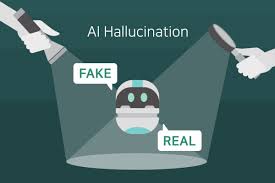
AI hallucinations occur when artificial intelligence models generate incorrect, misleading, or entirely fabricated information. These errors are particularly problematic in high-stakes fields such as medicine, law, and finance, where accuracy is critical. One effective method to reduce AI hallucination risks is active learning, a machine learning approach where the model selectively chooses the most informative data points for training. By continuously improving its knowledge through human intervention and intelligent data selection, active learning enhances AI accuracy and reduces the likelihood of generating false or misleading responses.
Active learning works by allowing the Al hallucination detection and accuracy improvement to identify areas where it has high uncertainty or lacks confidence in its predictions. Instead of relying solely on vast amounts of randomly labeled data, the model actively queries experts or human annotators for clarification on the most ambiguous or complex examples. This targeted approach ensures that the AI learns from the most relevant and challenging cases, strengthening its understanding and minimizing hallucinations. By focusing on critical areas of uncertainty, active learning reduces the risk of AI generating responses based on weak or incomplete knowledge.
Another way active learning helps reduce hallucination risks is by improving data efficiency. Traditional supervised learning requires large amounts of labeled data, which can be costly and time-consuming to produce. However, not all data points contribute equally to AI performance. Active learning prioritizes the most valuable data samples, reducing the need for excessive labeling while still achieving high accuracy. By concentrating on meaningful learning opportunities, AI models can refine their decision-making processes and avoid making unfounded claims, ultimately decreasing hallucinations.
How Does Active Learning Reduce AI Hallucination Risks?
Active learning also enhances AI robustness by exposing the model to diverse and edge-case scenarios. AI models tend to perform well on common patterns found in training data but struggle with rare or out-of-distribution samples. These unfamiliar cases often trigger hallucinations, as the model attempts to generate plausible yet incorrect responses. By actively selecting and incorporating difficult or uncommon examples into training, active learning strengthens AI’s ability to handle a broader range of real-world queries. This exposure helps prevent the model from making assumptions when faced with novel inputs.
Human-in-the-loop training is a critical component of active learning that further mitigates hallucination risks. AI systems are not infallible, and human oversight ensures that errors are detected and corrected in real-time. When the model encounters uncertain or ambiguous situations, it consults human annotators for guidance. This iterative feedback loop continuously refines AI predictions, reinforcing factual accuracy and reducing the likelihood of fabricated information. Over time, the AI becomes more adept at distinguishing between reliable and unreliable patterns, leading to fewer hallucinations.
Beyond improving training quality, active learning also fosters model transparency and accountability. Since AI actively selects the most uncertain examples for review, researchers and developers gain insight into the model’s weaknesses. Understanding where and why an AI system struggles allows for targeted improvements, making the model more trustworthy and reliable. This process also builds user confidence, as AI systems trained with active learning demonstrate higher precision and a reduced tendency to produce misleading content.
Active learning is a powerful approach to reducing AI hallucination risks by focusing on uncertainty, optimizing data efficiency, exposing the model to diverse scenarios, integrating human oversight, and promoting transparency. By continuously refining AI models through intelligent data selection and expert feedback, active learning significantly enhances accuracy and reliability. As AI systems become more integrated into everyday applications, active learning will play a crucial role in ensuring that AI-generated content remains factual, trustworthy, and aligned with real-world knowledge.